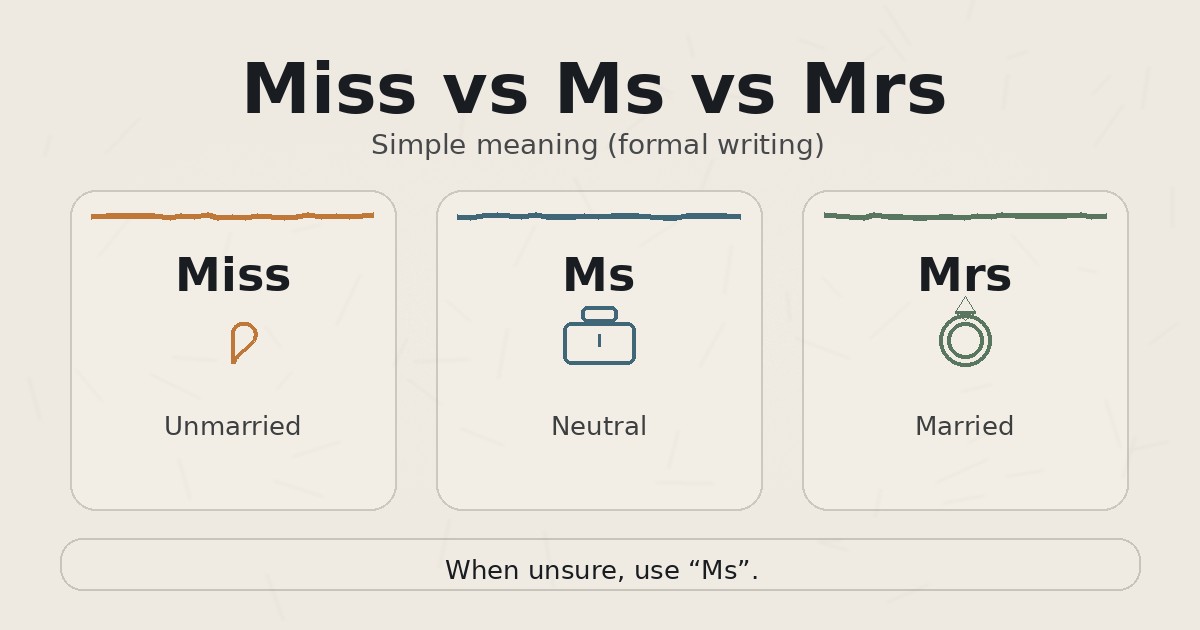
If you’ve ever stared at a form or an email draft thinking, “Should I write Miss or Ms?”—you’re not alone. It’s a super common confusion, especially because these titles can feel a bit old-fashioned… yet they still show up everywhere: job applications, school records, bank forms, invitations, and official letters.
In this guide, I’ll explain the difference between Miss and Ms, how it compares with Mrs, and how to choose the right one without overthinking. I’ll also clear up a couple of common mix-ups like difference between mis and miss (yes, people search that too).
What These Titles Actually Mean
Before we compare them, here’s the quick meaning:
Miss
Miss is traditionally used for a woman who is not married (often younger, but not always).
Ms
Ms is a neutral title for a woman regardless of marital status.
This is why many people prefer it in professional or formal situations.
Mrs
Mrs is traditionally used for a married woman (often with her husband’s last name, though not always).
So when people ask the difference between Miss and Ms and Mrs, it mostly comes down to how much the title is connected to marital status.
The Difference Between Miss and Ms
Let’s make the difference between Miss and Ms easy:
- Miss = usually indicates unmarried
- Ms = does not indicate married or unmarried
If you want a simple rule, here it is:
Use “Ms” when you don’t know someone’s marital status—or when it’s not relevant.
That’s the practical diff between Miss and Ms most people need.
Examples (real-life style)
- Ms Rahman will attend the meeting at 10 AM. ✅ (professional, neutral)
- Miss Rahman will attend the meeting at 10 AM. ✅ (correct, but implies unmarried—sometimes unnecessary)
This is why, in many workplaces, Ms is the safest and most modern choice.
Difference Between Miss & Ms in Formal Writing
In formal letters or emails, the safest option is almost always:
Choose “Ms” unless someone has clearly told you they prefer “Miss” or “Mrs”
It keeps things respectful and avoids making marital status the focus.
Email example:
- Dear Ms Ahmed,
Thank you for your response…
If you’re unsure, this simple approach solves the “diff between Ms and Miss” problem instantly.
Miss and Mrs Difference (And When It Matters)
Now let’s cover the miss and mrs difference:
- Miss = unmarried
- Mrs = married
So the difference between Miss and Mrs is directly tied to marital status.
Where this matters
- Wedding invitations
- Traditional family/social settings
- Some school records (depending on country)
- Older official documents
Where this usually doesn’t matter
- Work emails
- Professional profiles
- Modern forms (often prefer Ms)
If you’re comparing the difference between Miss Mrs choices in a professional setting, Ms often beats both.
Difference Between Mrs and Ms
People also search the difference between Mrs and Ms a lot, because they look similar.
Here’s the simplest way to remember:
- Mrs = married (traditional)
- Ms = neutral (married or unmarried)
So if you’re stuck deciding the diff between Mrs and Ms, ask one question:
Is marital status relevant here?
If the answer is “no,” choose Ms.
Difference Between Miss, Mrs, and Ms (Quick Table)
Here’s a quick view of the difference between Miss Mrs and Ms:
| Title | Typical Meaning | Marital Status Shown? | Best Used For |
|---|---|---|---|
| Miss | Unmarried woman | Yes | Traditional/social contexts |
| Ms | Woman (neutral) | No | Professional + formal writing |
| Mrs | Married woman | Yes | Traditional/social contexts |
This table is basically the whole mrs ms miss difference in one glance.
What About Mr? (Difference Between Mr, Ms, and Mrs)
Since many people search the difference between Mr Ms and Mrs, here’s the quick explanation:
Mr
Mr is used for a man, and it does not show marital status in the way Mrs/Miss traditionally do.
So when someone asks the difference between Mr, Mrs, Miss, the key point is:
- Mr is neutral about marital status
- Miss/Mrs historically hint at marital status
- Ms was created to be neutral like Mr
That’s why Ms is often seen as the equivalent of Mr for women.
Which One Should You Use? (Practical Rules)
Here are simple, real-world rules that work almost every time:
Use “Ms” when…
- you’re writing professionally (emails, job applications)
- you don’t know marital status
- you want to be respectful and neutral
Use “Miss” when…
- someone explicitly prefers it
- you’re in a traditional setting where Miss is expected
- you’re addressing a young girl (common in some places)
Use “Mrs” when…
- someone clearly uses it (e.g., “Mrs Khan” on official documents)
- it’s a formal/traditional context and you’re sure she prefers it
If you’re choosing between Ms and Mrs and Miss, and you’re not 100% sure—go with Ms.
“Miss” vs “Misses” (Difference Between Miss Misses)
This one surprises people, but it’s searched a lot: difference between miss misses.
Miss (title / verb)
- Miss (title): Miss Farah
- miss (verb): I miss you / Don’t miss the bus
Misses (verb form / plural)
- misses (verb): He misses his family.
- Misses can also mean more than one “Miss” in plural, but it’s uncommon in modern writing.
So if you meant the grammar side, that’s the clean explanation of the difference between miss misses.
Difference Between Mis and Miss
Another common confusion: difference between mis and miss.
“mis-” (prefix)
mis- is a prefix meaning wrongly or badly:
- misunderstand
- mismanage
- misbehave
“miss”
miss can be:
- a title (Miss Sara)
- a verb (miss a train, miss someone)
So mis (as a prefix) is about something being wrong, while miss is a word/title/verb.
FAQ
1) What is the difference between Miss and Ms?
The difference between Miss and Ms is that Miss traditionally shows someone is unmarried, while Ms is neutral and doesn’t show marital status.
2) What’s the safest option in emails: Miss or Ms?
In most professional situations, Ms is the safest choice. That’s the simplest diff between Miss and Ms for formal writing.
3) What is the difference between Ms & Miss compared to Mrs?
The difference between Ms & Miss is marital-status neutrality: Ms is neutral, Miss traditionally means unmarried, and Mrs traditionally means married. This covers the difference between Miss and Ms and Mrs.
4) What is the difference between Mrs and Ms?
The difference between Mrs and Ms is that Mrs traditionally indicates married, while Ms can be used whether someone is married or not.
5) Is “mis” the same as “miss”?
No. The difference between mis and miss is that mis- is a prefix meaning “wrong,” while miss is a title or a verb (to fail to catch/attend, or to feel someone’s absence).
Conclusion
The difference between Miss and Ms is mostly about one thing: whether you want to reveal marital status. Miss and Mrs are traditional titles that often hint at whether someone is unmarried or married. Ms is modern and neutral—so it’s usually the best choice for professional writing and situations where marital status isn’t relevant.
If you remember one simple rule, remember this:
When unsure, choose “Ms.” It’s respectful, widely accepted, and avoids unnecessary assumptions.
Leave a Comment