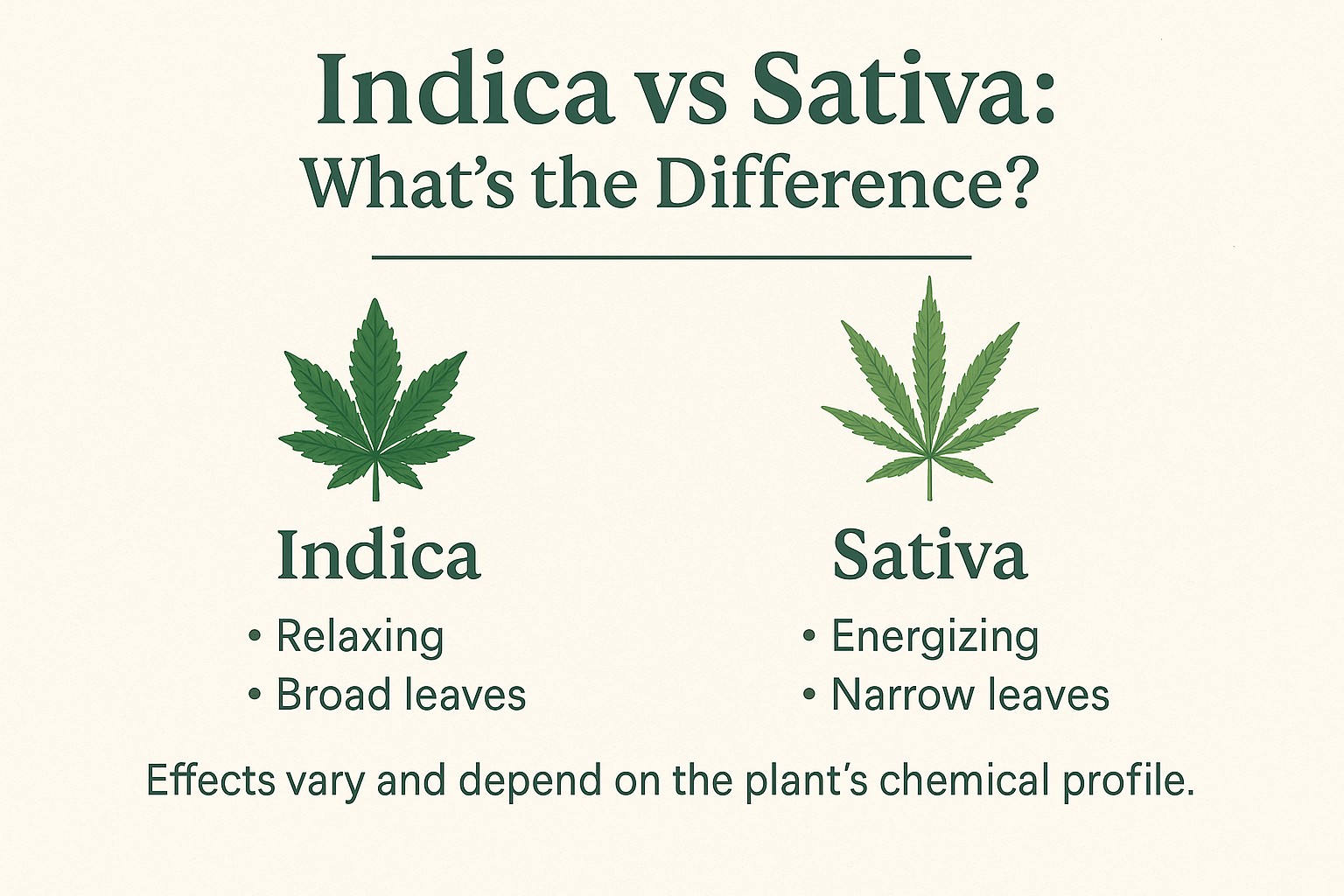
If you’ve ever asked a friend—or a dispensary—whether something is “indica or sativa,” you’re definitely not alone. The indica vs sativa debate is everywhere, mostly because people want a simple answer: Will this feel calming or energizing?
But here’s the thing: the labels are helpful shortcuts, not perfect science. Once you understand what they originally meant (and what they mean today), the difference between indica and sativa becomes much easier to explain.
Quick note: Cannabis laws vary by country/state. This article is for general education, not medical advice.
Quick answer (in plain English)
- Indica is traditionally linked with a more relaxing, “body-heavy” reputation.
- Sativa is traditionally linked with a more uplifting, “head-high” reputation.
- In real-world products, many are hybrids, and effects depend more on the plant’s chemical profile than the name.
What is Indica?
Indica refers to cannabis plants that are typically:
- Shorter and bushier
- Have broader leaves
- Often described as “calming” in popular culture
People commonly associate indica with evening vibes—think “wind down” energy. That said, not every indica will feel the same for every person.
Why people describe indica as “relaxing”
A lot of “indica-like” experiences may come down to:
- Specific terpenes (aromatic compounds)
- The balance of THC, CBD, and other cannabinoids
- Your own body chemistry, mood, and environment
So yes, the label can hint at an effect—but it’s not a guarantee.
What is Sativa?
Sativa refers to cannabis plants that are often:
- Taller and leaner
- Have narrower leaves
- Often described as “energizing” in popular culture
Many people connect sativa with daytime energy, creativity, or focus. But again—your experience can vary widely depending on the strain’s chemistry and your own tolerance.
Why people describe sativa as “uplifting”
Sativa’s “bright” reputation is often tied to:
- Terpenes that feel more stimulating to some users
- Different cannabinoid mixes across products
- Personal sensitivity to THC
In short: sativa is often marketed as energizing, but the label alone can’t promise that outcome.
Difference between Indica and Sativa (easy comparison chart)
Here’s a simple chart you can remember for exams, interviews, or quick understanding:
| Feature | Indica | Sativa |
| Typical plant shape | Short, bushy | Tall, thin |
| Leaf shape | Broad | Narrow |
| Popularly associated “feel” | Relaxing, body-focused | Uplifting, head-focused |
| Common marketing use | Evening / winding down | Daytime / active |
This is the classic difference between indica and sativa most people are taught first—and it’s a good starting point.
The part most people miss: labels don’t always predict effects
If you’ve ever tried something labeled “indica” and still felt alert (or tried a “sativa” and felt sleepy), you’re not imagining it.
Why indica vs sativa isn’t always accurate today
- Hybrids are everywhere
Most modern cannabis strains are cross-bred. So “indica” or “sativa” is often more of a category label than a pure type. - Chemistry matters more than the name
The mix of cannabinoids (like THC/CBD) and terpenes influences how a product feels. - Your context changes everything
Sleep, stress, food, caffeine, and even the setting you’re in can affect your experience.
So while indica vs sativa is a helpful first filter, it’s not the full story.
What does “Hybrid” mean?
A hybrid is a strain that blends indica and sativa genetics. That’s common now—almost standard.
You’ll often see hybrids described as:
- Indica-dominant hybrid (leaning more relaxing)
- Sativa-dominant hybrid (leaning more uplifting)
- Balanced hybrid (somewhere in the middle)
Hybrids are one reason the “indica vs sativa” debate feels confusing—because many products are essentially a mix.
Practical way to think about indica vs sativa
Instead of treating indica/sativa like a rule, treat it like a hint.
If you’re trying to understand a product label more clearly, look for:
- A basic description of the effects (calm, focus, sleepy, etc.)
- A lab report (if available) showing THC/CBD
- Any terpene notes (some brands list them)
And if you have health conditions or take medications, it’s smart to talk with a qualified professional.
FAQ: Indica vs Sativa
Is indica vs sativa a real scientific difference?
There are botanical differences in how plants can look, but the felt effects aren’t perfectly predicted by “indica” or “sativa.” Modern strains are often hybrids, and chemistry plays a bigger role.
What’s the difference between indica and sativa in one sentence?
The simplest answer: indica is typically associated with relaxation, sativa with uplift—though real effects depend on the strain’s chemical profile and the person.
Why do some “sativas” make people sleepy?
Because sleepiness can come from cannabinoid strength, terpene mix, dose, or personal sensitivity—so the label doesn’t always match the experience.
Are hybrids better than indica or sativa?
Not “better,” just different. Hybrids can be more balanced or more tailored to a certain feel, depending on their chemistry.
Conclusion
The indica vs sativa comparison is useful as a quick guide, but it’s not a perfect prediction tool. Traditionally, the difference between indica and sativa is described through plant shape and “relaxing vs uplifting” effects. In modern products—where hybrids are common—cannabinoids and terpenes usually explain the experience better than the label alone.
Leave a Comment