If you’ve been hearing these names everywhere—Zepbound and Mounjaro—you’re probably asking the same thing most people do:
Are they basically the same medication… or totally different?
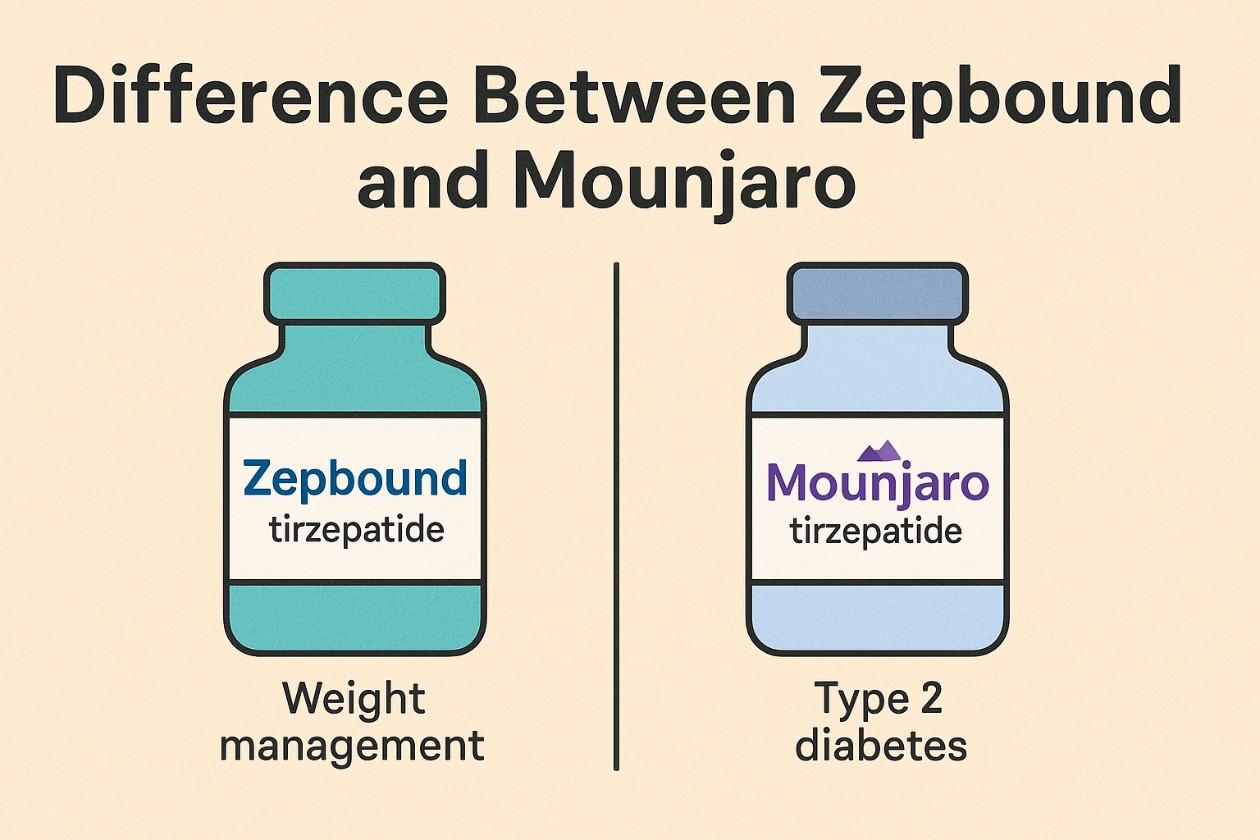
Here’s the clear answer: the difference between Zepbound and Mounjaro is mostly about what they’re approved to treat and how they’re billed/covered, not about the “main ingredient” itself. Both are made by Eli Lilly and both contain tirzepatide. (FDA Access Data)
(Quick note: This is educational info, not medical advice. Always follow your clinician’s guidance and your country’s local rules.)
The one-line difference
- Mounjaro = tirzepatide for type 2 diabetes (blood sugar control). (FDA Access Data)
- Zepbound = tirzepatide for chronic weight management (and certain obesity-related indications). (FDA Access Data)
So when people compare Zepbound vs Mounjaro, they’re usually comparing the label/approved use more than the molecule.
What is Mounjaro used for?
Mounjaro (tirzepatide) is FDA-approved as an add-on to diet and exercise to improve glycemic (blood sugar) control in adults with type 2 diabetes. (FDA Access Data)
People sometimes talk about weight loss with Mounjaro, but the key point is: its approved U.S. indication is type 2 diabetes. (FDA Access Data)
What is Zepbound used for?
Zepbound (tirzepatide) is FDA-approved for chronic weight management in adults with obesity, or overweight with at least one weight-related condition, alongside reduced-calorie diet and increased physical activity. (U.S. Food and Drug Administration)
You may also see Zepbound discussed for obesity-related conditions (for example, obstructive sleep apnea in adults with obesity, depending on label updates/indications). (Zepbound)
Zepbound vs Mounjaro: what’s actually the same?
This is where the confusion comes from—because a lot is the same.
1) Same active ingredient
Both contain tirzepatide. (FDA Access Data)
2) Same “once-weekly injection” concept
Both are designed as once-weekly subcutaneous injections (under the skin). (FDA Access Data)
3) Similar titration idea (dose increases over time)
Zepbound’s prescribing information describes a starter dose and then gradual increases to reduce side effects and find a maintenance dose. (Your prescriber decides what’s appropriate for you.) (Lilly)
The biggest differences (what most people really mean)
1) FDA-approved indication (the main one)
- Mounjaro: type 2 diabetes (FDA Access Data)
- Zepbound: weight management (and certain obesity-related indications) (U.S. Food and Drug Administration)
This single difference affects everything else—especially insurance.
2) Insurance coverage and prior authorization
Because the approved uses differ, insurance plans may:
- cover one and not the other,
- require different documentation,
- apply different prior-authorization rules.
So even if the medicine inside is the same, access can feel very different in real life.
3) How doctors describe the goal of treatment
- With Mounjaro, the headline goal is usually A1C/blood sugar control (with weight change often discussed as part of the overall picture). (mounjaro.lilly.com)
- With Zepbound, the headline goal is weight management (and potentially obesity-related improvements). (U.S. Food and Drug Administration)
Can you switch from Mounjaro to Zepbound (or vice versa)?
People do ask this a lot, but it’s not a DIY decision.
Even though both contain tirzepatide, switching can involve:
- different insurance approvals,
- different prescribed doses,
- how you tolerated side effects,
- your medical history and goals.
If you’re considering a switch, the safest move is: ask your prescriber and pharmacist and follow the current prescribing info.
Side effects and safety warnings (high-level)
Because they share the same ingredient, many side effects and warnings overlap—most commonly gastrointestinal effects (like nausea, vomiting, diarrhea, constipation), especially during dose increases.
Both products include serious warnings/contraindications in their labeling (for example, thyroid C-cell tumor risk warnings and specific populations who should not use them). Always review your medication guide and talk to a clinician if anything feels off. (FDA Access Data)
FAQ: difference between Zepbound and Mounjaro
What is the difference between Zepbound and Mounjaro?
The difference between Zepbound and Mounjaro is mainly the FDA-approved use: Mounjaro is approved for type 2 diabetes, while Zepbound is approved for chronic weight management (and certain obesity-related indications). Both contain tirzepatide. (FDA Access Data)
Is Zepbound just Mounjaro for weight loss?
They contain the same active ingredient, but they are different branded products with different approved indications and coverage rules. (FDA Access Data)
Which one is “better”?
Neither is automatically “better.” The better fit depends on your diagnosis, health goals, eligibility, and what your clinician recommends, plus what your insurance covers.
Do they have the same dosing?
They follow a similar “start low and increase gradually” approach, but your exact dose and schedule should come from your prescriber and the product’s current prescribing information. (Lilly)
Conclusion
The difference between Zepbound and Mounjaro is mostly about purpose and paperwork: Mounjaro is approved for type 2 diabetes, while Zepbound is approved for weight management (and certain obesity-related indications). Under the hood, both use tirzepatide, which is why people compare them so often. If you’re choosing or switching, your safest path is to base the decision on your diagnosis, clinician advice, and insurance rules. (FDA Access Data)
10 SEO keywords (comma separated)
difference between zepbound and mounjaro, zepbound vs mounjaro, mounjaro vs zepbound, zepbound and mounjaro difference, is zepbound the same as mounjaro, mounjaro for diabetes vs zepbound for weight loss, tirzepatide zepbound vs mounjaro, zepbound indication, mounjaro indication, switching from mounjaro to zepbound
Leave a Comment